I can’t believe how much better Tamil movies are to Hindi movies. It’s like night and day, especially when I compare to the utter garbage that my parents watch. The first of these two movies was not only really good, but had such broad strokes in showcasing set pieces for Tamil culture, dance, art, and Vedic ceremony. The way the original writer of the novel that these movies are based upon, Ramasamy Krishnamurthy, blended culture, art, and storytelling is just incredible to see in movie format. Mythic stories I had read on the depiction of Shiva and his worshippers was depicted with stunning accuracy from the dynastic group supporting Shiva worship primarily, for example. Albeit, not without limits, I don’t think the original novelist nor the movie writers are learned theologians, so you have instances of bickering between Vishnu and Shiva in comedic commentary but this probably isn’t inaccurate as there are Vedic Puranas that speak of calming divisions albeit it was to further affirm a unified theology. The majority of people in ancient times wouldn’t be as learned as people have the opportunity to be now and different dynasties may have played favorites for their respective alliances; albeit never to the extent that Western Indology had falsely portrayed. These movies do an accurate job of showing that while there is favoritism, the various dynastic alliances would never see each other in Western terms of Satanism, demon worship, blasphemy, or any such notions pertaining to thought crimes. There would be belief in blessings, curses, and demons in ancient times, but not that any of the other deities were ever demonic themselves like in a Western context. It was refreshing to finally see a more accurate historical portrayal.
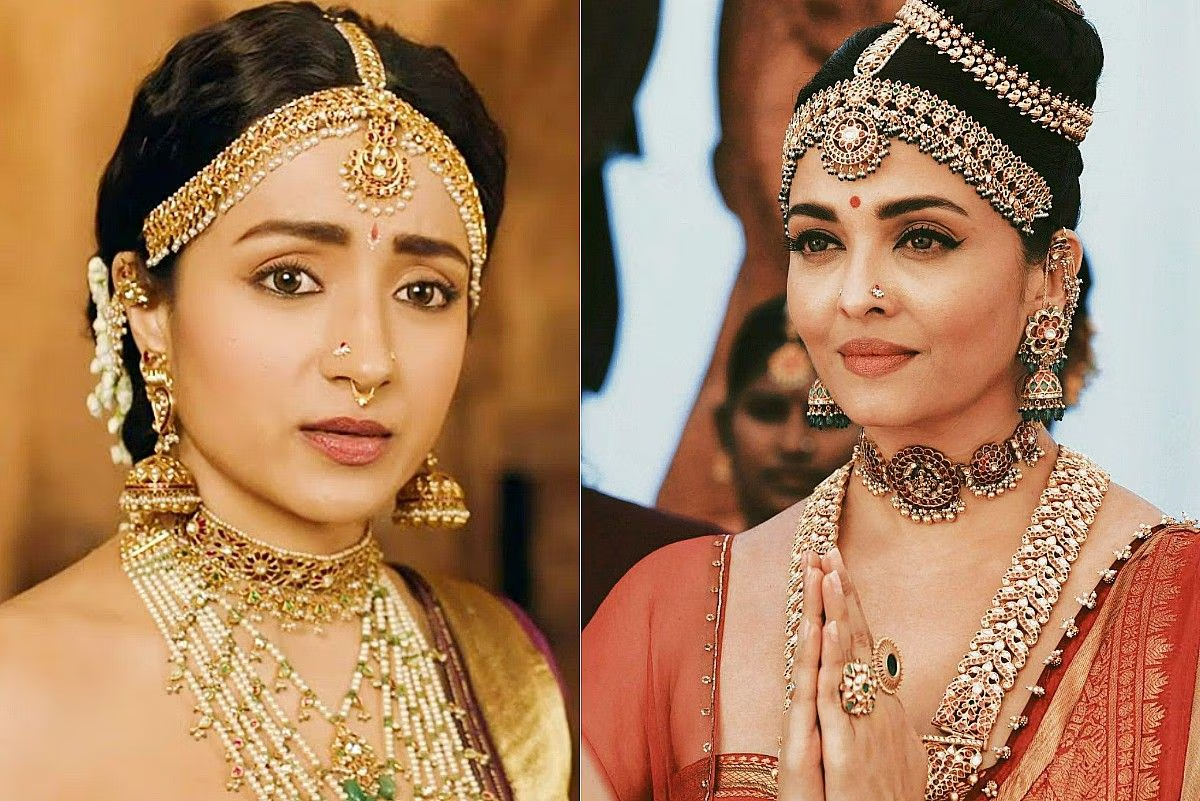
I really enjoyed the first film. The set-up for the various dynastic conflicts was masterfully done. From Karikalan, the eldest son of the Chola Emperor, who goes on warring and conquest to expand the Chola empire in an effort to forget his memories of repeatedly betraying his first love, Nandhini. To Karikalan’s younger brother Arunmozhi who is the titled character Ponniyin Selvan, albeit he isn’t the main character. Karikalan’s loyal attendant who goes on an adventure to protect the current Chola dynasty, Vallavaraiyan Vandiyathevan, who uncovers scheme after scheme from various dynastic rivals who bid to usurp the current Chola dynasty, including one of their Uncles who actually has a more rightful claim to the throne,
Uttama Chozhan. Most of the story is Vallavaraiyan working under Karikalan and Karikalan’s sister, the Royal Princess named Kundavai, who Vallavaraiyan is in a tryst with. The most compelling and memorable character throughout this entire story within both movies is definitely the main villain, Nandhini. Everything around this conflict centers around her ambition for revenge against her ex-lover, Karikalan. From living peacefully as a student priestess at the royal temple, to catching the interest of Kundavai and becoming her retainer when they were young teenagers, to then catching the eye and trying to please Karikalan, and then being falsely viewed as a seducer and being banished by Karikalan and Kundavai’s Mother and Aunt. And then, after rebuilding her life to serve the King of another land, to have Karikalan start a war of conquest to expand the Chola empire and then kill the King of Pandiyan who treated her kindly in cold blood, despite her begging Karikalan to have mercy as the King already lay maimed. Nandhini seeking revenge for her Kingdom, her people, and her deep-seeded bitterness towards Karikalan was such a compelling motive for the story.

By the end of both films, I felt like Nandhini was the only compelling character with an actual motive, climax, and resolution to her story. She was the only memorable character by the end of this historical fiction drama, because she was the only one with a complete story arc, while the others didn’t have it. The Uncle figure, Uttama Chozhan, had an entire betrayer arc set-up for two movies and then there’s no payoff at the end. I’m not sure if the original novelist had wanted to sanitize the historical Uttama Chozhan’s legacy with this historical fiction tale by having the fictional Nandhini be the driving force for a tragic death that happens in the second film. I don’t understand what was the point of giving Uttama Chozhan a betrayer arc and then not committing to it, when the set-up, motive, and building up of conflict to a dynastic three-pronged war was perfectly in place for a huge payoff. Instead, he gets sidelined for some friend character of a person who died, who we know or see much of and they only involve themselves in a war due to their own confusion about the actual facts of the tragic death. Even the historicity part would have fit, if he’d just conspired with Nandhini’s faction somehow within the second movie. I wish they had just made this into alternate history as a focus or just pure fiction with name changes, because it felt like there was all this build-up for an epic three-pronged war and then only one of the story arcs gets resolved in any meaningful way, and then the story abruptly ends. The first movie was so enrapturing with build-up, plotting, and giving depth to each faction; the second-half of the second movie just rushes from plot point to plot point and then abruptly ends the story. Yet, despite Nandhini getting a full story, I felt like the ending didn’t make sense, because of what was revealed about her past and what that means for her value to the Pandiyan dynasty. Even within the framing of the story, her last scene makes no sense whatsoever. She was doubtlessly the best character in the entire story, the driving force of the plot, and she had such a compelling arc but the story cheapens the actual climactic event and then her ending. Her character archetype is most similar to Yoshihiro Togashi’s characters like Yu Yu Hakusho’s Mukuro or Hunter x Hunter’s Morena Prudo, but with a very rushed ending that was disappointing for me because it felt like Nandhini’s character never reached her full potential. However, by the end, Nandhini was the most memorable character out of them all.
Overall, I really liked both movies conceptually and wish there was a Fantasy-style aspect as there’s clear inspiration to re-invigorate old Indian novelist stories like this because of the global inspiration from Game of Thrones and I’d love to see more like Ponniyin Selvan, but perhaps better done with concluding story arcs. I’d give the first movie a 10 / 10 and the second movie a 7 / 10 as my general rating for both of them.

Discover more from Jarin Jove's Blog
Subscribe to get the latest posts sent to your email.